
The Reserve Bank of India's (RBI's) latest order on unsecured loans is set to hit the banking sector's growth in the near-term, cautioned analysts, as they see banks slowing down on aggressive retail lending. Besides, cost of funds for non-banking finance companies (NBFC) is expected to inch up as banks will pass on higher capital charge to NBFCs. "We believe the fallout of the RBI action will be mainly on growth, given the rising dependence on unsecured retail loans and lending to NBFCs for growth.

The Reserve Bank of India's latest order prohibiting Bajaj Finance from sanctioning and disbursing loans under its 'eCOM' and 'Insta EMI Card' products may not have serious implications on the non-banking finance company's profitability, provided the ban is lifted within six to eight weeks, analysts said. "In a surprise move, the RBI has asked Bajaj Finance to stop sanction and disbursal under two of its digital lending products. "While the move is negative, the speed of correction will be key to reinstate products," global brokerage Jefferies said in a report.

Bihar has fertile grounds for caste to emerge as an electoral issue.

Wilful defaulters owe SBI Rs 80,000 crore. 10 nationalised banks are owed another Rs 1.5 trillion.

The number of companies had touched a low of 792 in July 2020 amid heightened uncertainty because of COVID-19.

Shares of Reliance Industries (RIL) traded 2 per cent higher at Rs 2,310.10 on the BSE in intra-day trade in an otherwise volatile market after the company reported a 27.4 per cent year-on-year (YoY) growth in its consolidated net profit at Rs 17,394 crore for the September quarter (Q2FY24). While revenue growth of the company was flattish YoY at Rs 2.32 trillion, the profit rose on the back of operational improvement across most segments, especially higher profits in the O2C (oil-to-chemicals) and oil & gas businesses, as well as the retail business. "Strong operational and financial contribution from all business segments has helped Reliance deliver another quarter of robust growth," said Mukesh Ambani, chairman and managing director of the company.

India's trade ties with Israel have only strengthened in the years after 2019. The total value of trade rose to $10.5 billion on a rolling four-quarter basis in June 2023 from $5.5 billion in the same month in 2019, shows a Business Standard analysis of data from the Centre for Monitoring Indian Economy (CMIE). A rolling four-quarter number provides a comparable figure across different time periods.
People are availing far more of certain kinds of unsecured loans than was the case before the pandemic. Bank lending for buying consumer durables and funding of credit cards and other personal loans have risen by Rs 6.9 trillion between August 2019 and August 2023, shows a Business Standard analysis of data from the Reserve Bank of India (RBI). These loans are typically unsecured, which means they are provided without collateral.
India's biggest non-bank finance company, Bajaj Finance (BAF), is set to raise capital after a gap of four years. On October 5, the board of directors will meet to approve the fund raise by way of preferential issue and/or qualified institutional placement (QIP) subject to regulatory and shareholder approvals. The move, analysts said, comes ahead of expectations, and could be in the wake of simmering competition in the consumer lending space, especially with the launch of Jio Financial Services (Jio Fin). "While we still do not have finer details on the game-plan of Jio Financial, it has plans to initially foray into consumer and merchant lending.

The stock exchange on which they are traded boasts higher profits than most of the companies whose shares are hitting new highs. Only 37 of approximately 2,000 listed companies with comparable data for 2022-23 (FY23) reported higher profits, while the rest had lower profits. Despite rising corporate profitability, the universe of companies that outperform the National Stock Exchange (NSE) in terms of profitability has been shrinking of late, according to an analysis of companies with comparable data over the past seven years.

Meaningful market share would go to those who have the distribution strength to push their products, such as banks.

Unemployment has been rising among the young, with authorities suspending data disclosures after youth unemployment crossed 20 per cent.

When billionaire Warren Buffet started his first fund in 1956 with eleven investors, he invested a token amount of $100 of his own money as "skin in the game". Buffet denies it but he is credited with coming up with the term describing those running a fund risk some of their own money in it. The mutual fund (MF) industry has more than Rs 81,200 crore riding on its schemes, shows a Business Standard analysis of data on sponsor and associate contributions from the Association of Mutual Funds in India (Amfi).

Nearly two million postcards and eight million letters pass through India's post offices daily.

The share of foreign companies in private sector investments, directed towards building new factories and other facilities, has declined over the past six months. A mix of large domestic announcements and relatively lower growth in foreign capital expenditure (capex) plans have played a role, although foreign investments remain near record levels. The share of foreign companies in the overall private sector investments over the four quarters ended June 2023 has dipped to 14.9 per cent, as shown by a Business Standard analysis of data from the project tracker Centre for Monitoring Indian Economy.
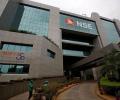
The National Stock Exchange (NSE) has made a fresh attempt at settling a regulatory investigation into the misuse of Trading Access Point (TAP) software at the bourse. The Securities and Exchange Board of India (Sebi) rejected a similar application in 2022. "NSE and its employees have filed a consolidated settlement application dated May 4, 2023, with Sebi.

Almost 25 per cent central government posts were vacant as of March 2022, compared to 9.4 per cent in March 2002.

New investment projects announced in the manufacturing sector declined in the three months ended June 2023. The value of new projects was lower than in the March quarter, as well as the year-ago period, shows data from project tracker the Centre for Monitoring Indian Economy (CMIE). The new project announcements worth around Rs 85,000 crore in the manufacturing segment in June were a 48 per cent decline from the Rs 1.6 trillion in March and a 66 per cent decline from the Rs 2.5 trillion seen in June 2022.

Shares of MRF crossed a first time Rs 100,000 mark, hitting a record high of Rs 100,300, up 1.4 per cent on the BSE in intra-day trade. on June 13, 2023. The stock surpassed its previous high of Rs 99,879.65, touched May 8, 2023. Thus far in the current calendar year 2023 (CY23), MRF has outperformed the market by gaining 14 per cent on improved financial performance.

The state with the most people has displaced the state with the largest economy in terms of investor additions. Uttar Pradesh (UP) added 126,000 new investors in April, reveals National Stock Exchange (NSE) disclosures. This is higher than Maharashtra's 118,000. Maharashtra, which is home to India's financial capital of Mumbai, has traditionally been the biggest source of investors.
 © 2025 Rediff.com - Investor Information - Advertise with us - Disclaimer - Privacy Policy - Sitemap - Feedback - About us - Terms of use - Grievances